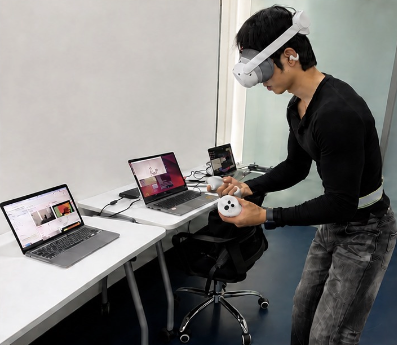
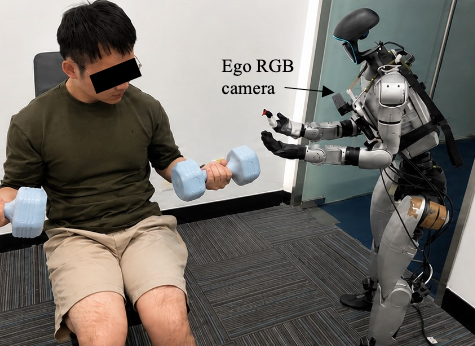
Teleoperation enables a human operator to control a robot located in a remote or hazardous environment (e.g., space, undersea, surgical or disaster-response settings) through a communication link, while the robot feeds sensory information back to close the human in the control loop. This project studies how humans and remotely-controlled robots can work together safely and efficiently when communication is affected by latency, packet loss and limited situational awareness.
We investigate teleoperation architectures that augment the operator's capability with shared and predictive control, haptic (force/tactile) feedback, and autonomy that can take over in critical moments. Using operator-in-the-loop experiments, we examine how control transparency, feedback delay and the level of robot autonomy influence task performance, workload, situation awareness and operator trust, and we design interfaces and control strategies that maintain performance under degraded communication. The outcomes aim to provide evidence-based guidelines for the human factors design of teleoperated robotic systems.
- Student PI(s): Zhixiong WANG
- Project date: Jan 1, 2026 - now